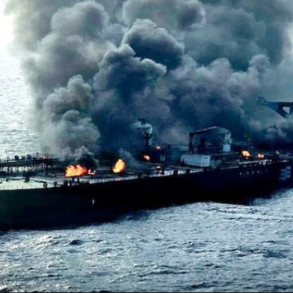

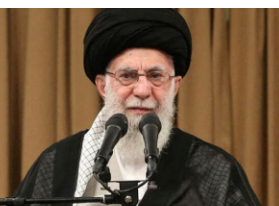
Iranian state media has confirmed the death of Iran’s Supreme Leader, Ali Khamenei, following coordinated airstrikes reportedly carried out by the United States and Israel, marking a pivotal and deeply destabilizing moment in the country’s modern history.
The announcement, broadcast on state television on Sunday, stated that the 86-year-old leader was killed at his office during the early hours of Saturday when the strikes began.
Authorities immediately declared a 40-day national mourning period and a week-long public holiday in his honor.
The confirmation followed hours of conflicting reports.
Earlier, semi-official Iranian outlets had denied claims of Khamenei’s death, insisting he remained in command. However, the narrative shifted when state television formally acknowledged his killing.
U.S. President Donald Trump claimed responsibility for the operation in a post on his Truth Social platform, stating that advanced American intelligence capabilities, working in coordination with Israel, ensured the mission’s success.
He described the development as a “turning point” for Iran and suggested it presented an opportunity for political transformation within the country.
Israeli Prime Minister Benjamin Netanyahu had earlier indicated there were “growing signs” that Khamenei had not survived the strikes.
International news agency Reuters also reported, citing a senior Israeli official, that Khamenei’s body had been located prior to Iran’s official confirmation.
Khamenei had led the Islamic Republic since 1989, succeeding Ruhollah Khomeini, the architect of Iran’s 1979 Islamic Revolution.
As Supreme Leader, he wielded ultimate authority over the executive, legislative, and judicial branches of government, served as commander-in-chief of the armed forces, and maintained control over the powerful Islamic Revolutionary Guard Corps (IRGC).

His death activates a constitutional succession process that, while anticipated in contingency planning, has never been implemented under active conflict conditions.
Analysts suggest Iran’s leadership may establish an interim council to oversee governance during the transition.
Speaking to Al Jazeera, Barbara Slavin of the Stimson Center in Washington, D.C., noted that Iranian authorities likely had contingency measures in place.
“There will probably be a council set up to run the country. It may already have been running the country, as far as we know,” she said.
The development significantly heightens tensions in the Middle East and raises concerns about potential retaliatory actions, regional instability, and broader geopolitical consequences.
Further updates are expected as the situation unfolds.