
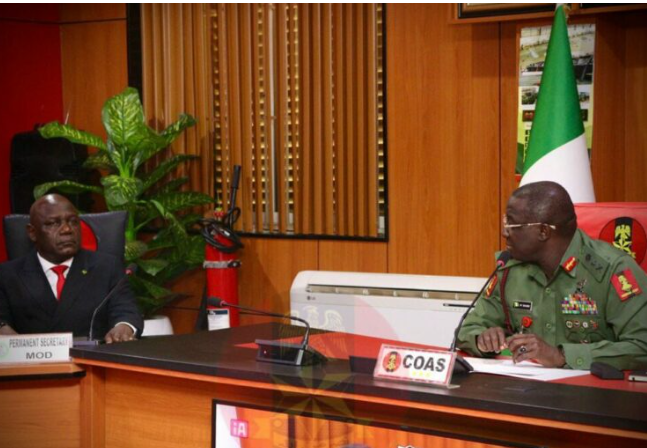
The Chief of Army Staff (COAS), Lieutenant General Waidi Shaibu, has described the ongoing expansion of the Nigerian Army Aviation wing as a strategic initiative aimed at enhancing operational response time, precision engagement and situational awareness across multiple theatres of operation.
In a statement issued by the Army spokesperson, Col. Appolonia Anele, the COAS said the aviation wing has become a critical pillar in the Nigerian Army’s modernisation drive and a decisive force multiplier in addressing the country’s evolving security challenges.
According to him, the expansion of aviation capabilities, alongside the enhancement of unmanned aerial systems, is redefining battlefield dynamics and strengthening the Army’s capacity to project power, dominate operational space and safeguard the civil populace.
“The ongoing expansion of Army Aviation capabilities and enhancement of Unmanned Aerial Systems are vital enablers that significantly improve response times, precision engagement and situational awareness across multiple theatres of operation,” he said.
The Army Chief emphasised that sustained policy support and predictable resource allocation are essential to maximising the operational impact of air power.
He noted that maintaining operational superiority in today’s complex threat environment requires seamless integration of advanced aviation platforms with responsive administrative frameworks.
He further stressed that the success of the modernisation agenda depends largely on sustainable funding structures, efficient procurement processes and robust logistical support systems.

Predictable resource flows, he added, would guarantee continuity, operational effectiveness and long-term dominance in support of ground operations.
Lt.-Gen. Shaibu also highlighted the growing infrastructural and logistical demands resulting from the recent increase in personnel strength approved by President Bola Tinubu.
He disclosed that thousands of recruits are currently undergoing training, underscoring the need for deliberate investment in barracks construction and facility upgrades.
Such investments, he noted, are necessary to ensure adequate accommodation, improved welfare and enhanced living standards for personnel, factors he described as crucial to morale, cohesion and overall operational effectiveness.