


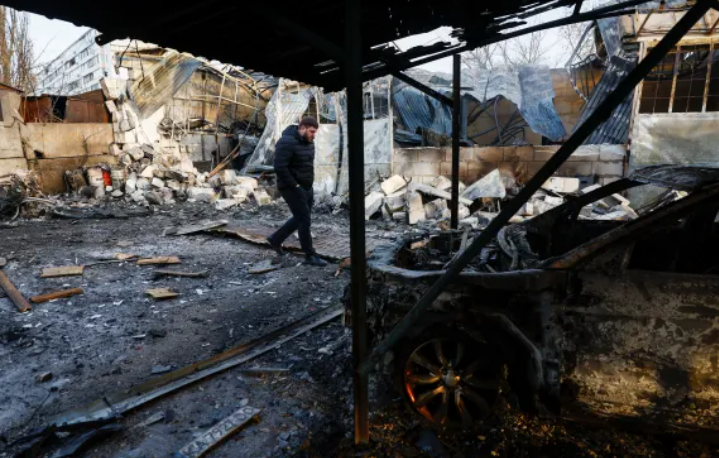
The European Union has strongly condemned Russia’s latest wave of attacks on Ukraine, describing them as acts of “terror,” as Moscow claims fresh territorial gains in the country’s northeast.
Russia’s Ministry of Defence said its forces have taken full control of Starytsya, a village in Ukraine’s Kharkiv region, amid ongoing frontline fighting.
In a statement posted on Telegram, the ministry also claimed that Russian troops overran Ukrainian positions in the nearby settlements of Vovchanski Khutory and Okhrimovka. The claims could not be independently verified.
The Russian defence ministry further said its forces carried out strikes against Ukrainian drone capabilities and energy infrastructure, actions it framed as part of its military campaign.
In southern Ukraine, officials reported that Russian air strikes, drones and shelling hit the Kherson region, injuring at least six civilians. Oleksandr Prokudin, head of the regional military administration, said the attacks damaged critical and social infrastructure, including three high-rise residential buildings and five private homes.
Separately, Ukraine’s National Police said two officers were wounded in the Dniprovskyi district after a Russian drone dropped explosives, with one officer sustaining shrapnel injuries to the arm and leg.
The overnight attacks drew sharp reactions from Ukrainian and European officials, particularly over their impact on civilians and essential services. EU Ambassador to Ukraine Katarina Mathernova said the strikes left families in Kyiv without electricity, heating or water, describing the attacks as “terror.”

Ukraine’s parliamentary speaker, Ruslan Stefanchuk, said that despite air defence efforts, the strikes caused widespread disruption, leaving Chernihiv without electricity, damaging homes across Kyiv, and hitting a maternity hospital in Kharkiv.
He said the attacks demonstrated that Russia was not seeking peace and renewed calls for additional air defence systems for Ukraine.
Prime Minister Yulia Svyrydenko said repeated strikes on energy infrastructure were aimed at plunging the country into cold and darkness, warning that delays in strengthening air defences were costing lives.
Ukrainian lawmaker Kira Rudik echoed the humanitarian concerns, noting that many Ukrainians woke up without electricity, water or heating after the attacks, while others did not survive.
As the war continues, renewed fighting and aerial assaults are compounding humanitarian challenges across Ukraine, intensifying international calls for greater protection of civilians and critical infrastructure.