The Delta State Government has earmarked N175 billion in the 2026 budget to accelerate grassroots development across the state’s 25 local government areas, as part of efforts to expand rural infrastructure and strengthen healthcare delivery.
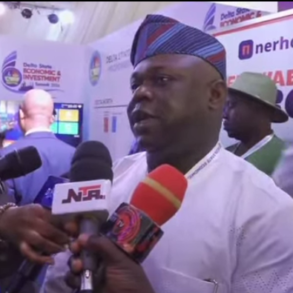
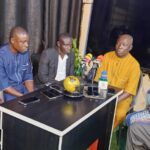
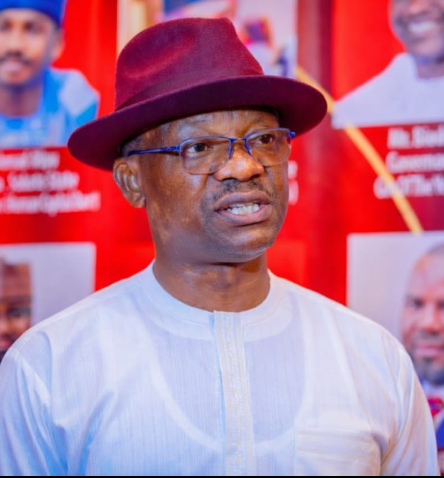
Commissioner for Works (Rural Roads) and Public Information, Charles Aniagwu, disclosed this on Sunday during an appearance on The Morning Show on ARISE News, stating that each local government area has been allocated N7 billion for critical interventions.
According to him, the administration of Governor Sheriff Oborevwori initially set aside N3 billion per council, amounting to N75 billion for rural road expansion. The governor subsequently approved an additional N4 billion per local government to address healthcare, education and other human capital development priorities.
“As I speak to you, every local government in Delta has N7 billion dedicated to it. When you multiply that by 25 local government areas, you are talking about N175 billion strictly for projects at the local level, aside from other state-wide projects,” Aniagwu said.
He explained that the allocation builds on previous interventions. In 2024, the state approved N1 billion per local government, which was increased to N2.1 billion in the 2025 budget following an impact assessment by the governor.
“This time around, the governor said we must not only expand rural road networks but also intervene in health, education and other areas that are peculiar to each local community,” he added.
Aniagwu described the funding framework as unprecedented, asserting that no other state in the federation currently dedicates similar levels of direct funding to local government development.
On healthcare, the commissioner noted that the N7 billion per council allocation complements over N16 billion already earmarked for the sector, with emphasis on infrastructure, equipment and manpower development.
He acknowledged the impact of medical personnel migration but said the administration has recruited additional health workers and expanded training programmes to bridge manpower gaps and curb capital flight.
Among key initiatives is the establishment of a College of Health Technology in Ovrode, Isoko North Local Government Area, to train nurses and allied health professionals. Aniagwu also stated that Delta is the only state in Nigeria with four state-owned universities actively involved in training doctors and other medical personnel.
The commissioner further disclosed that Delta leads subnational governments in contributory health insurance coverage, with over 2.8 million residents enrolled.
“Today, with as little as N7,000, an enrolled person can access medical services in accredited hospitals without having to empty their pockets. Only the Federal Government comes close to our enrollment figures,” he said.
He highlighted ongoing renovation of more than 400 dispensaries statewide, upgrades of general and cottage hospitals, and the construction of a new Specialist Hospital in Osubi, Okpe Local Government Area, to complement existing tertiary facilities in Asaba, Oghara and Warri.
Aniagwu added that the state has procured advanced diagnostic equipment, including MRI scanners, previously accessible mainly in private hospitals.
“We are not just building structures; we are equipping them with modern technology and strengthening the manpower needed to run them,” he stated.
According to the commissioner, the administration’s integrated focus on grassroots infrastructure, healthcare access and human capital development is aimed at improving living standards and ensuring inclusive growth across Delta State.