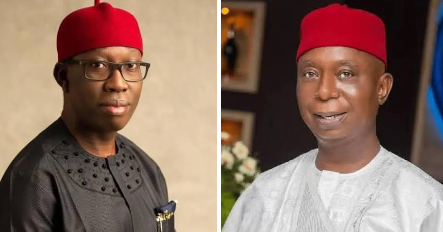
As Delta North Senatorial District approaches the 2027 general elections, it is important that discussions about representation are guided by reflection, balance, and a shared commitment to the long-term good of the people. The prominence of Sen. Ifeanyi Okowa and Senator Ned Munir Nwoko in these conversations is understandable, given their records of service and visibility in public life. Any forward-looking conversation must therefore begin by acknowledging their contributions while also considering what phase Delta North has reached in its democratic journey.
Sen. Ifeanyi Okowa’s public service career reflects depth, stability, and experience. He has served as Commissioner, Secretary to the State Government, Senator, and later as a two-term Governor of Delta State. These roles demonstrate clear leadership capacity and a thorough understanding of governance at multiple levels. Having occupied both legislative and executive offices, Okowa has already had the opportunity to influence policy broadly and shape the direction of the state.
At this point, his legacy is well established, and his continued relevance in national and state affairs does not necessarily depend on returning to the Senate. Stepping aside in 2027 could be seen not as withdrawal, but as statesmanship; creating space for a new generation to grow while offering guidance from a position of experience.
Sen. Ned Munir Nwoko, as the current occupant of the Delta North seat, has also made contributions within his capacity. His previous representation of the Aniocha/Oshimili Federal Constituency and his current senatorial role have brought attention to important causes and provided support to sections of the district. His efforts reflect commitment and engagement. However, democratic representation is most strengthened when leadership is periodically refreshed, allowing new ideas, energy, and perspectives to enter the system. After serving at the federal level, there is merit in allowing other capable individuals to also contribute at that level of responsibility.
For many citizens across Delta North, especially those at the grassroots, politics often feels distant and dominated by a few familiar names. Opening the political space in 2027 would help address this perception by giving room to individuals who may be closer to local communities, more accessible to ordinary people, and deeply connected to the daily realities of the district. Such inclusion would strengthen public trust and deepen participation in governance.
Encouraging both Okowa and Nwoko to step aside in favour of fresh leadership should therefore be understood in a respectful and forward-looking sense. It is wisdom, sense of responsibility to the spirit of continuity through renewal, where experience makes way for emergence, and legacy is preserved by mentoring rather than by prolonged occupation of office.
Delta North stands to gain from a peaceful transition that blends respect for past service with openness to new leadership. By allowing fresh voices to emerge in 2027, the district can reaffirm its commitment to inclusive democracy, shared ownership of power, and a future in which governance feels closer to the people it is meant to serve.