
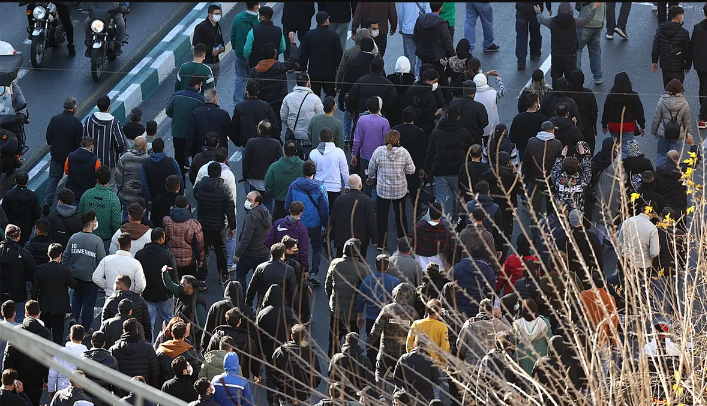
Iran is experiencing renewed nationwide protests as demonstrations over rising living costs and economic pressures entered a fifth day, with clashes reported between protesters and security forces in several western and southern cities.
Iran’s semi-official Fars News Agency and Kurdish human rights group Hengaw reported fatalities during confrontations in areas including Lordegan, Azna and Kouhdasht. While reports confirmed that lives were lost, authorities have yet to provide full details on the circumstances surrounding the deaths.
Videos circulating on social media showed incidents of unrest in some locations, including burning vehicles and confrontations with security forces, as demonstrations spread beyond Tehran to other parts of the country. Verified footage confirmed protests in Tehran, Lordegan and Marvdasht in Fars province.
State media reported that clashes involved members of the Revolutionary Guards and the Basij militia, adding that at least 13 police officers and Basij members were injured during stone-throwing incidents. Authorities also confirmed the death of one member of the security forces in Kouhdasht, although details remain disputed.
In response to the unrest, the government ordered the temporary closure of schools, universities and public institutions nationwide. Officials said the move was taken for energy conservation due to cold weather conditions, though it coincided with heightened security measures in several cities.
President Masoud Pezeshkian adopted a conciliatory tone, saying his administration was prepared to engage with citizens. “We recognise the legitimate demands of the people and are ready to address them through dialogue and lawful channels,” the president said, urging calm and restraint on all sides.
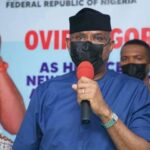
At the same time, Prosecutor General Mohammad Movahedi-Azad issued a warning against violence, stating that “any attempt to create disorder or destabilise the country will be met with a decisive response in accordance with the law.”
The protests began in Tehran among shopkeepers reacting to the sharp depreciation of the national currency against the US dollar before spreading to universities and other cities.
While the current unrest is smaller in scale than the mass protests of 2022, it reflects ongoing economic challenges and public concern over governance and living standards.
The situation underscores the need for sustained dialogue and economic reforms as authorities seek to restore stability while addressing citizens’ concerns.