

Venezuelan authorities have approved an amnesty for 379 political prisoners following the unanimous passage of a new law by the country’s National Assembly, marking a significant development in the nation’s political transition after the ousting of former president Nicolas Maduro.
National Assembly deputy Jorge Arreaza, who is overseeing the amnesty process, announced in a televised interview on Friday that the identified detainees are expected to be released “between tonight and tomorrow morning.”
According to Arreaza, the Public Prosecutor’s Office has submitted formal requests to the relevant courts to implement the amnesty measures. The legislation, adopted a day earlier, has raised hopes among families and human rights advocates that hundreds of detainees may soon regain their freedom.
Despite the announcement, the amnesty law contains notable exclusions. It does not apply to individuals prosecuted for “promoting” or “facilitating armed or forceful actions” against Venezuela’s sovereignty involving foreign actors. It also excludes members of the security forces convicted of terrorism-related offenses.
Interim President Delcy Rodriguez has previously leveled such accusations against opposition leader Maria Corina Machado, who remains in the United States and has expressed intentions to return to Venezuela.
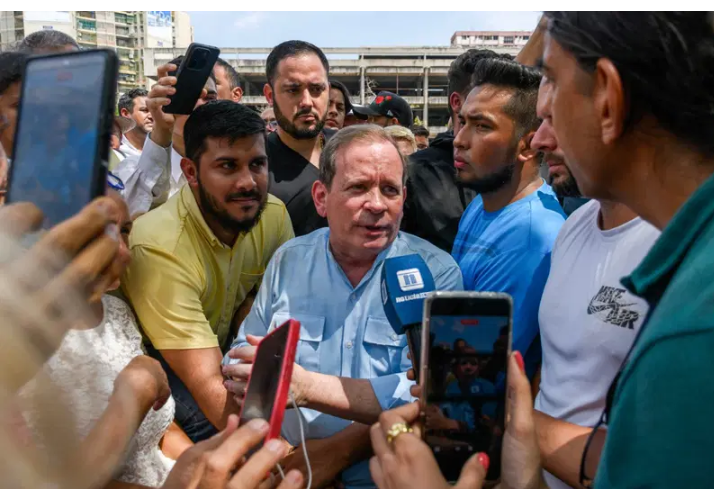
Some relatives of detainees have voiced concerns that their loved ones may not benefit from the law. Hiowanka Avila, speaking outside the Rodeo 1 prison near Caracas, said her brother, an ex-soldier detained in 2018 over an alleged drone attack plot against Maduro is unlikely to be covered by the amnesty.
Arreaza indicated that cases involving military personnel would be handled separately under the military justice system, with possible benefits granted “where appropriate.”
Human rights organization Foro Penal previously reported that approximately 650 political prisoners were being held nationwide, though the figure has not been updated since the latest announcement. Its director, Alfredo Romero, cautioned that amnesty is not automatic and would require court procedures, a process critics argue may face institutional hurdles.

Interim President Rodriguez defended the move in a national address, stating that her administration is working toward “a more democratic, more just, and freer Venezuela.”
Opposition figure Juan Pablo Guanipa, an ally of Machado, announced his full release shortly after the bill’s passage. Guanipa had earlier been freed but subsequently placed under house arrest. He called for the release of all remaining political detainees and for exiles to be permitted to return.
Exiled opposition leader Edmundo Gonzalez Urrutia, currently in Spain, welcomed the principle of amnesty but stressed the need for accountability. Writing on social media, he stated that lasting reconciliation requires both memory and responsibility, warning against impunity for past abuses.
The amnesty comes amid sweeping political changes following the removal of Maduro and his transfer to New York to face drug trafficking and related charges. Rodriguez, formerly vice president, assumed leadership with backing from the United States, including then-U.S. President Donald Trump, under arrangements that reportedly included Washington’s oversight of Venezuela’s oil sales.
It was gathered that the success of the amnesty process will depend largely on judicial implementation and whether it is applied consistently across cases.
For many families who have waited outside prisons for weeks, the announcement represents cautious optimism but not yet closure.