
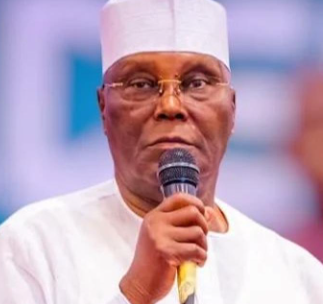
Former Vice President Atiku Abubakar has called for the immediate suspension and public review of the Nigerian National Petroleum Company Limited (NNPC Ltd)’s proposed refinery partnership with two Chinese firms.
In a statement issued on Friday by his Senior Special Assistant on Public Communication, Phrank Shaibu, Atiku accused the administration of President Bola Ahmed Tinubu of trying to mortgage Nigeria’s national assets through what he described as opaque and questionable agreements.
The deal involves a “Technical Equity Partnership” between NNPC Ltd and two Chinese companies – Sanjiang Chemical Company Limited and Xingcheng (Fuzhou) Industrial Park Operation and Management Co. Ltd – aimed at reviving the Port Harcourt and Warri refineries.
Atiku described the arrangement as “another dangerous gamble” with Nigeria’s economic future, arguing that the companies involved lack the technical experience needed to manage large crude oil refineries.
“It is both shocking and insulting that after wasting over $2.5 billion on endless refinery rehabilitation scandals, the NNPC is once again asking Nigerians to trust another experiment built on secrecy and questionable competence,” the statement said.
According to him, independent assessments showed that Sanjiang Chemical mainly operates in petrochemical production and has no known history of building or managing full-scale crude oil refineries.
“There is no publicly available evidence anywhere in the world showing that Sanjiang has ever built, operated, or managed a refinery of the size and complexity of the Port Harcourt or Warri refineries,” Atiku stated.
He also questioned the role of Xingcheng Industrial Park Operation and Management Co. Ltd, claiming the company has no verifiable background in refinery operations or petroleum engineering.
Atiku said it was troubling that the Federal Government and NNPC allegedly overlooked globally recognised refinery engineering firms in favour of companies whose technical capacity remains unclear.
He warned that the Tinubu administration could turn Nigeria’s refineries into “another expensive black hole of failed promises and reckless experimentation.”
The former vice president further raised concerns about the financial strength of Sanjiang Chemical, alleging that the company has faced declining revenues, shrinking profits and growing debt exposure.
“This raises a fundamental question: if a company is already battling financial compression and liquidity concerns in its own operations, how does it intend to revive two of Africa’s most troubled refineries?” he queried.
Atiku called for the immediate release of the full Memorandum of Understanding (MoU), transparent technical assessments of both firms, disclosure of Nigeria’s financial obligations, and a legislative probe into previous refinery rehabilitation spending.
“The era where NNPC signs opaque agreements abroad and expects Nigerians to clap blindly is over,” the statement added.
He insisted that the Port Harcourt and Warri refineries are too important to be handed over to what he described as uncertainty and poor corporate scrutiny.