


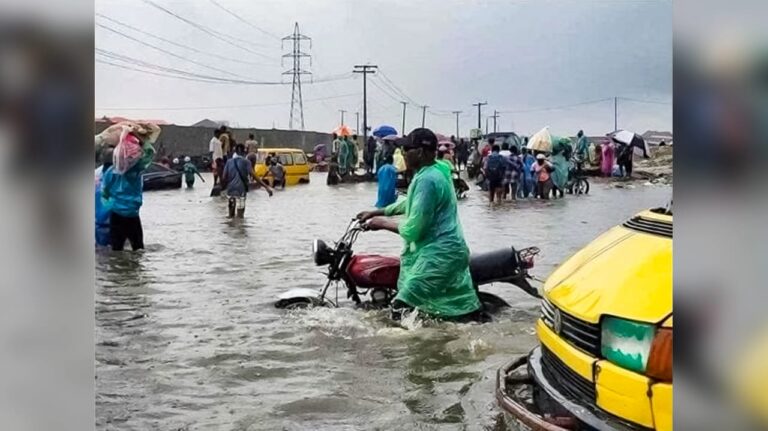
The devastating flooding that recently swept through parts of Abuja, including Asokoro, Maitama, Guzape, Katampe and other high-profile districts, should not be dismissed as an unfortunate consequence of heavy rainfall. It is a serious indictment of urban planning, environmental governance and regulatory oversight in Nigeria’s Federal Capital Territory.
The scale of the destruction raises an uncomfortable but necessary question: how did Abuja, a city designed and deliberately planned as Nigeria’s capital, get to the point where even its most affluent neighbourhoods could be overwhelmed by floodwater?
The answer cannot simply be blamed on nature. Heavy rainfall may trigger flooding, but poor planning, blocked drainage channels, indiscriminate construction, encroachment on waterways, destruction of green areas and inadequate maintenance can turn rainfall into a disaster. Where these failures persist for years despite the enormous public resources available to the Federal Capital Territory and the Federal Government, responsibility must ultimately be assigned to those entrusted with oversight.
President Bola Ahmed Tinubu and FCT Minister Nyesom Wike therefore owe Nigerians more than expressions of concern and emergency interventions after the damage has been done. The Federal Government and the FCT Administration have access to substantial financial resources, technical institutions, planning agencies and regulatory powers. They also have the authority to prevent development on waterways, protect green areas, enforce building regulations and maintain drainage infrastructure.
The fact that structures allegedly encroached on waterways and protected spaces could remain in place until a catastrophic flood occurred suggests a profound failure of supervision. It is particularly troubling that demolition exercises reportedly began only after the flooding had exposed the consequences of years of questionable urban development. If government officials knew that waterways had been obstructed, why were corrective measures not taken before lives, homes, businesses and investments were put at risk?
The recent decision by Wike to order the demolition of structures standing on water channels is necessary, but it should not become a substitute for accountability. Nigerians deserve to know who approved the structures, who inspected them, who ignored violations and whether officials benefited from the illegal developments.
The reported ban on converting green spaces, parks and gardens into commercial car dealership lots is equally welcome. But again, the fundamental question remains: who permitted such conversions in the first place?
A government cannot demolish buildings today and pretend that the problem began with the property owners. If approvals were issued illegally or regulations were deliberately ignored, those who authorised such developments must also face appropriate administrative or legal consequences.
The Tinubu administration must recognise that Abuja is not merely another city. It is the nation’s administrative and diplomatic centre. Its infrastructure should reflect the highest standards of planning, resilience and public administration.
The President cannot absolve himself of responsibility simply because the immediate administration of the FCT is under a minister. The Federal Capital Territory is under the direct authority of the Federal Government, and Abuja’s development has national implications.
Similarly, Wike must move beyond dramatic post-flood demolitions and undertake a comprehensive audit of the capital’s drainage system, waterways, green areas, development approvals and land allocations. There should be a publicly accessible review of major developments approved in flood-prone areas. Drainage channels should be mapped and protected. Natural watercourses must be restored where they have been blocked or narrowed. Green areas must be preserved, while illegal developments should be removed regardless of the political influence or financial standing of their owners. But enforcement must be fair.
The government must not create the impression that demolition is reserved for ordinary property owners while politically connected developers escape scrutiny. If a structure violates the master plan, the identity of its owner should not determine whether the law applies.
Abuja also needs a permanent flood-management strategy rather than emergency responses after every disaster. Drainage infrastructure must be upgraded to match the city’s rapid expansion. Desilting should become routine, not an activity undertaken only after flooding. Construction on hills and natural water paths must be subjected to rigorous environmental and engineering assessments.
Most importantly, public officials responsible for approving or failing to prevent dangerous developments must be held accountable. The enormous resources allocated to governance are meaningless if citizens receive infrastructure that collapses under predictable environmental pressure.
Abuja residents pay taxes, rents, levies and other charges. They have every right to demand a city where public planning is respected and where government protects, rather than compromises, the environment. The recent flood has erased the illusion that Abuja’s affluent neighbourhoods are immune from the consequences of poor governance. Water does not recognise political influence, official status or expensive property.
Tinubu and Wike now have an opportunity to demonstrate that the government’s response will be different from the familiar Nigerian cycle of disaster, outrage, demolition and forgetfulness. The solution is not merely to pull down buildings after a flood. It is to identify how those buildings came to exist, recover public spaces, restore waterways, prosecute officials who abused their positions and build infrastructure capable of protecting a rapidly growing capital.
Abuja should not have to wait for another devastating flood before government acts again. The rain has exposed the problem. What Nigerians now need is accountability, competent oversight and sustained action, not another round of promises.