

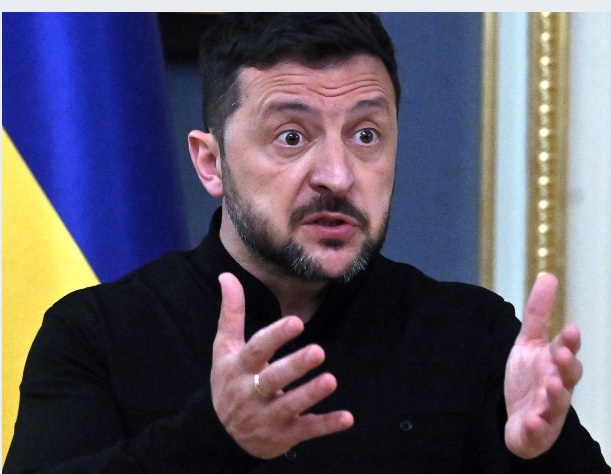
Ukrainian President Volodymyr Zelensky has removed the country’s top military commander, General Oleksandr Syrskyi, following days of public protests over controversial changes to Ukraine’s defence leadership.
The decision marks a dramatic policy reversal by Zelensky, who had only days earlier defended General Syrskyi while dismissing Defence Minister Mykhailo Fedorov as part of a sweeping overhaul of the country’s military command.
Thousands of protesters reportedly took to the streets across Ukraine, urging the president to reverse the shake-up and reinstate Fedorov’s strategy, which prioritised the use of drones, robotics and other advanced technologies in the country’s war effort against Russia.
Fedorov, 35, had emerged as a leading advocate of technology-driven warfare and became a symbol of innovation and resilience, particularly among younger Ukrainians. His vision for expanding the use of unmanned systems was widely credited with enhancing Ukraine’s battlefield capabilities.
His dismissal after only six months in office came at a time when Ukraine appeared to be gaining momentum in the conflict through increasingly effective long-range and medium-range drone strikes against military targets inside Russia and in occupied Crimea.
The defence reshuffle sparked widespread criticism, with many Ukrainians expressing fears that the sudden leadership changes could disrupt military operations at a critical stage of the nearly five-year conflict with Russia.
It was gathered that the protests highlighted growing public concern over the direction of Ukraine’s wartime leadership and underscored the importance of maintaining unity between the country’s political and military establishments.
The removal of General Syrskyi is expected to fuel further debate over Ukraine’s military strategy, particularly as Kyiv continues to rely on technological innovation to offset Russia’s superior manpower and conventional military strength.
Although the presidency has not provided a detailed explanation for the latest leadership change, the decision is widely seen as an effort to respond to mounting public pressure and restore confidence in the government’s handling of the war.
The latest developments come as Ukraine continues to defend its territory while seeking sustained international military and financial support in its prolonged battle against Russia.
Observers say the leadership shake-up will be closely watched by Ukraine’s allies, who regard political stability and military cohesion as essential to the country’s continued resistance against Russian aggression.
As the war enters another critical phase, attention is expected to focus on how the new military leadership will sustain battlefield momentum while preserving the public confidence that has remained a cornerstone of Ukraine’s defence efforts.